Whoa!
Using multiple chains used to mean juggling wallets and mental models.
Most people I talk to hate that fragmentation; it creates friction at the exact moment you should feel confident.
Initially I thought separate wallets for each chain were just a transitional annoyance, but then realized they actively tax decision-making and increase risk because people reuse accounts or skip security checks.
So yes — a good multi‑chain browser extension can cut friction and reduce mistakes, though it’s not a silver bullet.
Hmm… seriously?
Yeah. Browser extensions are the place where UX, security, and multi‑chain complexity collide.
On one hand, extensions like these give you quick dApp access and seamless chain switching.
On the other hand, they live in the browser—an environment with its own set of attack surfaces that require careful, user‑centric design and clear permission models.
Here’s what bugs me about most wallets.
They assume users are power users.
They show too many technical details without context, which leads to accidental approvals or confusing gas choices.
My instinct said we needed a better abstraction layer that preserves safety while surfacing only relevant controls, and product teams are slowly moving that way — though adoption is uneven.
Where multi‑chain extensions win (and where they still trip up)
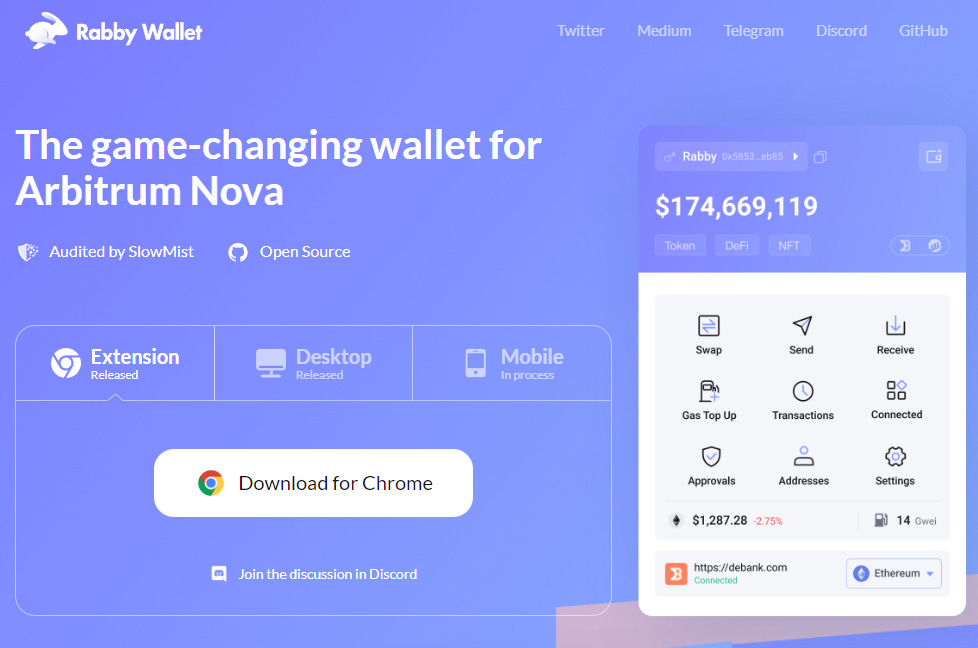
Check this out—if you want to try a modern multi‑chain extension built with granular permissions and a cleaner dApp connection flow, consider installing Rabby via this link: https://sites.google.com/cryptowalletextensionus.com/rabby-wallet-download/.
That single action can show you how a better flow works without forcing you to commit forever.
I’m biased toward wallets that treat permissions like first‑class citizens, because every unnecessary permission is an attack vector; and Rabby emphasizes per‑dApp permissions and clearer UI cues.
Okay, so check this out — permission prompts that explain exactly what a dApp will see and do? Very very helpful, especially when switching networks on the fly.
On the technical side, multi‑chain support means more than adding RPC endpoints.
Short sentence.
It requires transaction routing logic, gas estimation for different chains, token normalization, and safe fallback behavior when a chain’s RPC is flaky.
Initially I assumed chain switching was trivial, but actually it reveals UX edges — chains have different nonce rules, explorers, and meta‑transaction support, so the wallet must handle corner cases gracefully and show appropriate warnings when somethin’ smells off… which it often does.
Here’s an example users run into.
You connect to a lending dApp on Chain A, then switch to Chain B and try to sign a permit.
If the wallet doesn’t prevent cross‑chain signature misuse or at least warn you, you can sign something that looks harmless but is only valid on another chain, creating unexpected exposure.
So good wallets separate contexts clearly, tie approvals to chain IDs, and show origin details in bold so people know what they’re approving — that reduces accidental mistakes substantially.
Security tradeoffs are real.
Extensions have to balance convenience and isolation.
Some wallets lean into session‑based permissions and ephemeral approvals, while others allow blanket approvals to save time.
On one hand blanket approvals speed up workflows; on the other hand they increase blast radius if an attacker gets a dApp to request a wide scope.
Personally, I prefer granular approval by default, though I’ll admit it can be clumsy until the UX is polished.
(oh, and by the way…)
Hardware wallet support is a must for people who need stronger key protections.
A multi‑chain browser extension that integrates with hardware devices gives you the convenience of the extension plus the safety of offline key signing.
But integration must be smooth — pairing, signing prompts, and device naming need to be clear, or users will disconnect devices mid‑flow and create confusion.
This part still bugs me about many products; simple cues like “Your Ledger is connected for Chain X” matter a lot.
Developer tooling matters too.
If you’re a dApp builder, you want predictable behaviors when connecting to wallets, reliable JSON‑RPC fallbacks, and well‑documented permission models so you don’t accidentally ask for more scope than you need.
Good wallets offer clear developer docs and sandbox modes so devs can test multi‑chain flows without risking real assets; that improves the whole ecosystem.
On the flip side, poor documentation makes integration fragile, and then both devs and users get frustrated — a negative feedback loop that slows adoption.
Okay — how do you pick a wallet?
Short checklist: does it show per‑dApp permissions? Does it make chain context explicit? Does it allow hardware signing? Does it present fees and nonces in a digestible way?
Also check for active audits, bug bounties, and a responsive team, because community responsiveness matters when vulnerabilities are found.
If a wallet nails these things, it’s worth trying; if not, consider an alternative or use a hardware device for high‑value transactions.
FAQ
Is a browser extension safe for DeFi?
Short answer: yes, if used carefully.
Extensions are convenient, but you should combine them with good habits: use unique accounts for big sums, prefer hardware signing for large trades, verify RPC endpoints, and double‑check approval scopes before signing.
Seriously? Yes — those few habits reduce risk by a large margin.
What makes a wallet “multi‑chain” in practice?
It means the wallet understands multiple chain IDs, can switch networks smoothly, normalize tokens and addresses across chains, and manage connections so approvals are bound to the correct chain.
Longer term, it should also support features like meta‑transactions and gas abstraction where available, but start with clear chain isolation and user‑friendly switching.
Should I download the extension right away?
Try it in a low‑risk way first.
Create a new account, test small transfers, and explore permission prompts so you get comfortable.
I’m not 100% sure any single wallet will meet every user’s need, but exploring modern options helps—especially those that focus on making permissions and context obvious.